
New Year Kicks Off With Supermoon Lunapalooza
A super moon January 2018 is coming! On January 1st , the full Moon will be at or near its closest point in its orbit around Earth, making it a super-moon. Bundle up, get outside and look up!
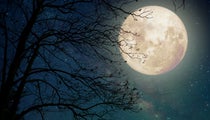
No matter what the rest of the New Year brings, earthlings are in for a double treat in January with the appearance of two super moons. The first one rises the night of New Year’s Day. The second a bound to be memorable “super blue blood moon” comes the last night of the month, topped off by a lunar eclipse.
A super-moon is a full moon that appears at the perigee, the closest point in the moon’s orbit to Earth. Super-moons appear to be about 14 percent larger and 30 percent brighter than full moons that appear at the apogee, the farthest point in the orbit, according to NASA.
The January super moon energy are the end of a trilogy of big moon treats that began December 3 with a full cold moon (a December full moon) that made for some spectacular photos.

Super-moons hang around all night, are easy to see and are not damaging to the eyes, no matter how long you moon-gaze. They often appear at their most spectacular as they rise and set, NASA notes.
The January 1 super-moon will be the biggest of the year. The moon will appear to be over-sized for a few nights after that, though will no longer be a full moon.
For those still nursing a hangover the night of January 1st , an even more intriguing super-moon will rise the night of January 31. That will be the second full moon of the month, which is usually called a “blue moon” because a double full-moon month occurs essentially once in a blue moon about every 2½ years. A blue moon is even rarer when it’s a super-moon.
But that won’t be the only rarity that night. The super blue moon will also occur during a total lunar eclipse, when the Earth moves between the sun and the moon, blocking the sun’s light from reflecting off the moon. If skies are clear, the total eclipse will be visible from eastern Asia across the Pacific Ocean to western North America.
Lunar eclipses make moons appear blood red because of the way the blocked sunlight bends. So prepare yourself for the super blue blood moon the night of the lunar eclipse. To get the full effect of the lunar eclipse, watch at moon set, NASA advises.
“Sometimes, the celestial rhythms sync up just right to wow us,” notes the space agency.


No comments:
Post a Comment